No matter a student's age, ability, or background, IXL produces measurable results. Review research studies to find out how IXL has made a difference in schools' performance.
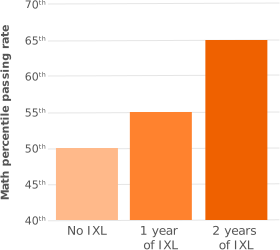
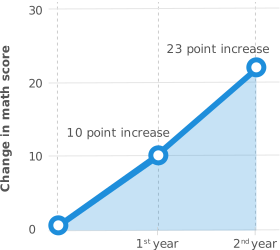
The math percentile passing rate on the Florida State Assessment (FSA) was 15 points higher in schools using IXL for two years compared to schools not using IXL.
Schools using IXL for at least one year had an ELA percentile passing rate 7 points higher compared to schools not using IXL.
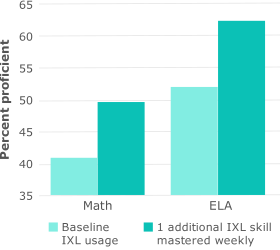
IXL schools performed better than non-IXL schools on both the math and ELA sections of the California Assessment of Student Performance and Progress (CAASPP).
The expected number of students with proficient scores on the CAASPP would increase by 8.5% for math and 10% for ELA if students mastered one additional IXL skill per week.
The percentile proficiency rate on the PARCC in schools using IXL for one year was 5 points higher in math and 4 points higher in ELA compared to schools not using IXL.
Schools using IXL for two years had a PARCC percentile proficiency rate 9 points higher in math and 8 points higher in ELA compared to schools not using IXL.
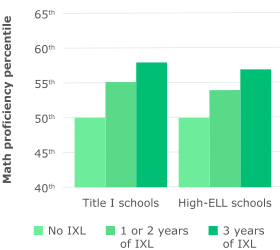
The percentile proficiency rate for Title I schools in Minnesota using IXL for three years was 8 points higher in math and 13 points higher in ELA compared to Title I schools not using IXL.
Minnesota schools with at least 30% ELLs using IXL for three years had a percentile proficiency rate 7 points higher in math and 12 points higher in ELA compared to high-ELL schools not using IXL.
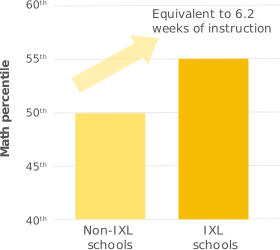
IXL's effect on math standardized test scores is equivalent to 6.2 weeks of extra instructional time each year, according to results from a study conducted in an Oregon school district.
100% of teachers surveyed said that their students' confidence in learning math increased.